
Patient-Specific Implants: How 3D Printing Is Shaping Modern Surgery
The medical use of 3D printing has gone far beyond anatomical models.
Today, one of the most promising areas of additive manufacturing is the development of patient-specific implants: devices designed around the anatomy of a specific patient rather than adapted from a standard shape.
These patient-specific implants are helping surgeons approach complex reconstruction with more precision, better anatomical fit, and a more personalized workflow.
Why 3D printing is so relevant for implants
Implants are among the most demanding applications in medical manufacturing. They must often combine anatomical precision, mechanical reliability, biocompatibility, surgical practicality, and patient-specific design.
Traditional manufacturing can produce excellent implants, but additive manufacturing introduces something different: freedom of geometry.
That freedom is especially useful when surgeons need to restore structures that are irregular, damaged, or partially missing after trauma, disease, or tumor resection.
In those cases, personalization is not just a nice extra. It can be central to the whole treatment strategy.
1. Mandibular reconstruction after tumor surgery
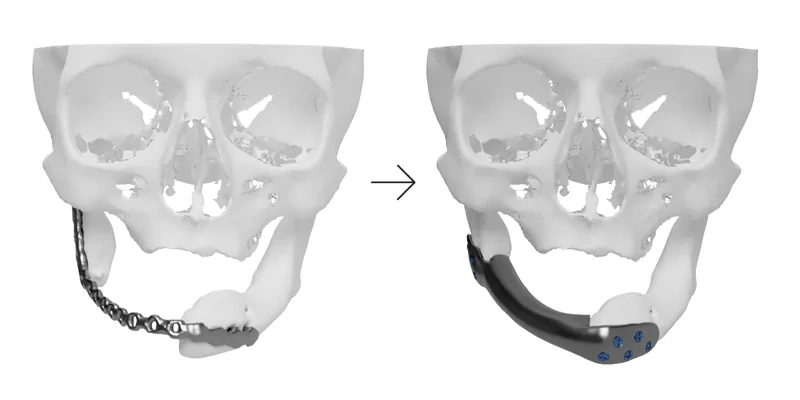
Jaw reconstruction is one of the clearest and most compelling use cases for patient-specific implants.
When part of the mandible must be removed, the challenge is not only structural. It also affects facial contour, dental alignment, function, speech, and quality of life.
A custom mandibular implant can be designed around the patient’s defect and surgical plan. That creates a very different workflow from relying only on off-the-shelf approaches.
2. Implant design and physical planning models
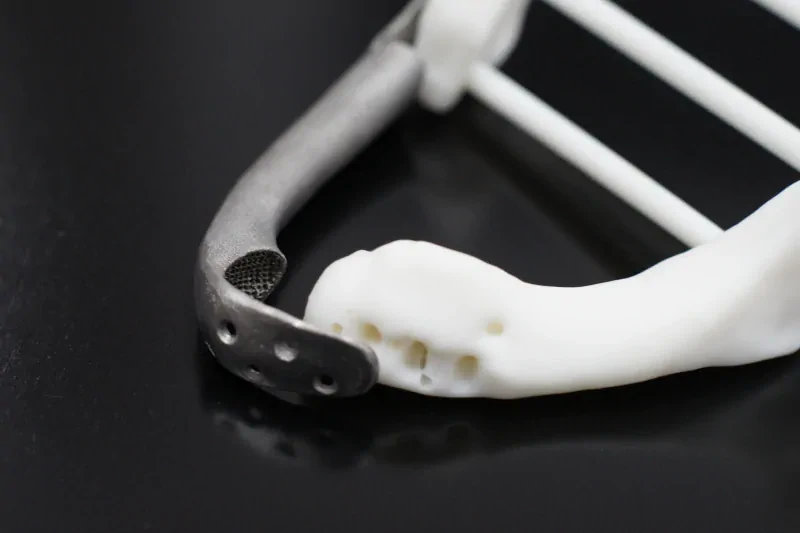
One of the strengths of patient-specific workflows is that surgeons and engineers can work not only from imaging, but also from physical models and precisely matched implant geometries.
This makes preoperative planning more concrete and helps align design intent with the actual surgical objective.
3. Cranial implants for skull reconstruction
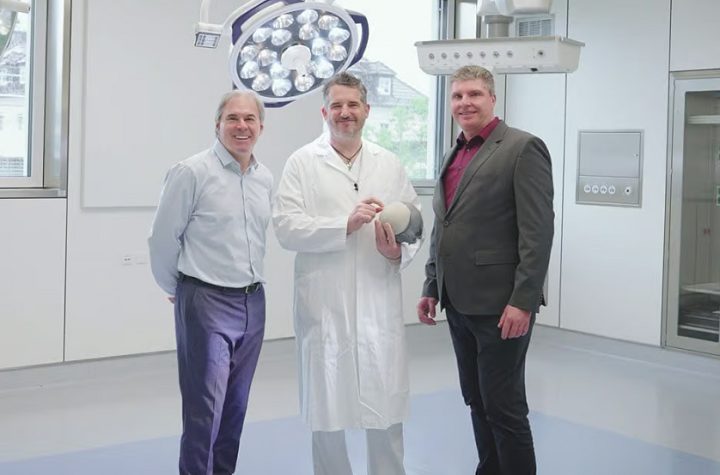
Cranial implants are among the most mature and compelling examples of patient-specific implant design.
When part of the skull is missing after trauma, oncologic surgery, or decompressive procedures, a custom implant can help restore protection and anatomical contour.
4. Not only bone: patient-specific heart valve concepts
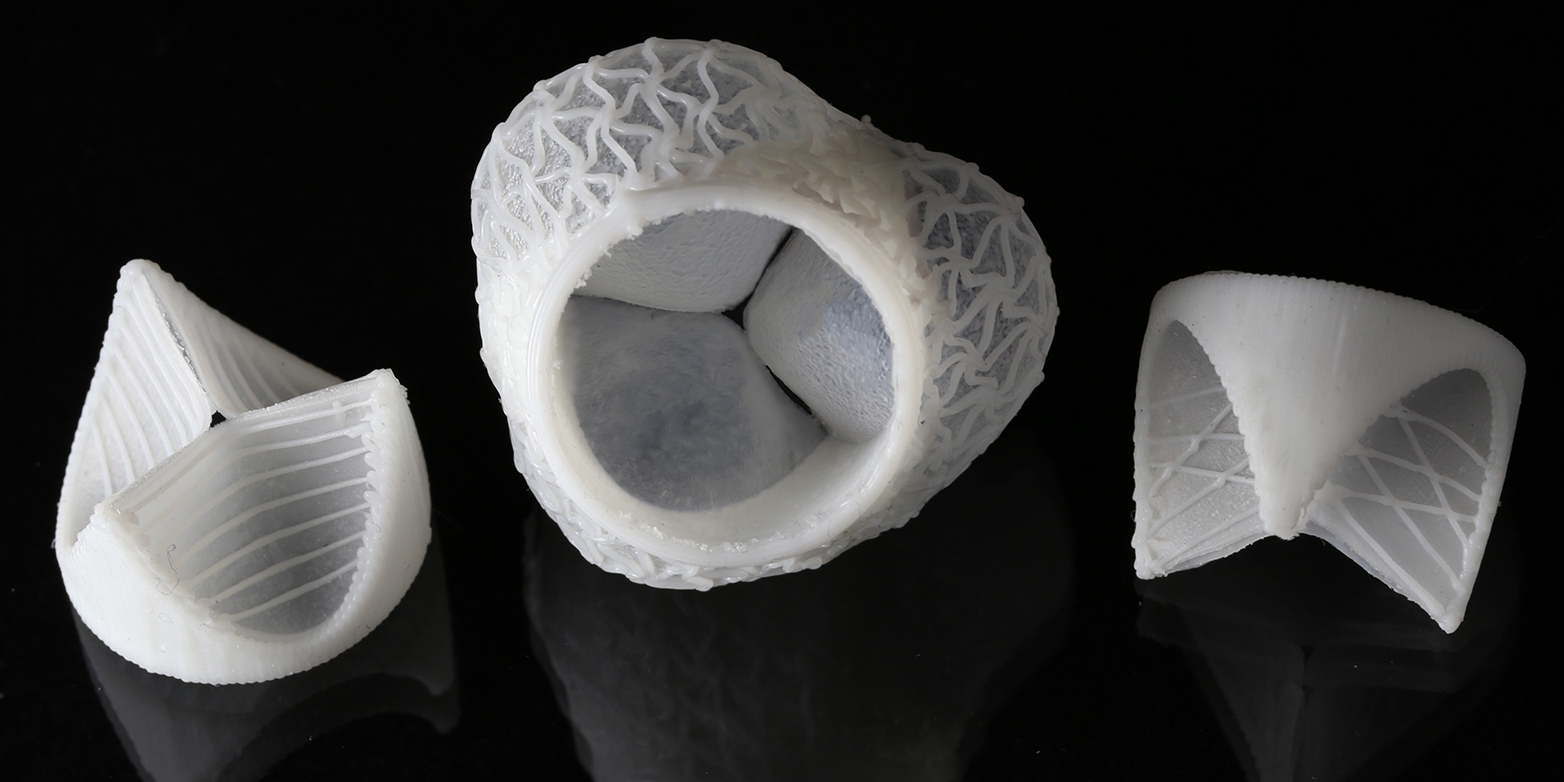
The future of implant design is not limited to rigid metallic parts.
Researchers are also exploring patient-specific silicone heart valves and other advanced soft implant concepts. These applications show how additive manufacturing is expanding into more functional and biomimetic medical devices.
What all of this means for the future of medicine
Taken together, these examples show that patient-specific implants are part of a broader movement toward:
- personalized surgery
- anatomy-driven treatment
- digitally planned care
- more advanced biomaterials
- tighter integration between design and medicine
Some of these applications are already clinical. Others remain in research. But the direction is clear: the future of implants is becoming more personal, more precise, and more design-led.
Where MedForm3D fits into this world
At MedForm3D, we see this evolution as bigger than the implant itself.
Patient-specific treatment starts with understanding anatomy clearly and translating imaging into something surgeons, engineers, and innovators can work with.
That is where a specialized 3D printing partner can help.
Our role is not to claim we replace implant developers or regulated manufacturers. It is to support the earlier and equally critical parts of the workflow, including:
- anatomy visualization
- patient-specific 3D models
- surgical planning support
- concept communication
- design-oriented thinking around complex cases
For teams exploring personalized treatment workflows, those steps matter a lot.
And in many cases, they are where the whole process begins.
Conclusion
Patient-specific implants are already reshaping parts of modern medicine.
From mandibular reconstruction to cranial implants and emerging heart valve concepts, the field is moving toward a world where implants are designed around the patient rather than chosen from a limited catalog.
That is a profound change.
And it is one of the clearest examples of how medical 3D printing can create real value in healthcare.
If you are working on anatomy-driven planning, patient-specific models, or complex medical 3D printing workflows, MedForm3D can help turn scan data into precise physical reality.
Order your model now on medform3d.com.
